NOVACANE SKIN & LASER
LASER OR LIQUID REMOVAL FOR COSMETIC BROW TATTOO (liquid for red or yellow pigment remnants)
LASER OR LIQUID REMOVAL FOR COSMETIC BROW TATTOO (liquid for red or yellow pigment remnants)
Couldn't load pickup availability
Cosmetic Brow Tattoo Removal – Laser OR Liquid Treatment
LASER (please scroll further for liquid)
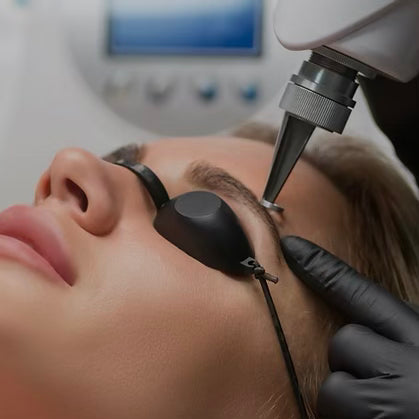
Cosmetic Brow Tattoo Removal is a laser-based treatment designed to fade or completely remove old, oversaturated, or poorly placed brow tattoos. Heavy pigment saturation, blocky shapes, or closely packed strokes can leave the brow area too dark and make it impossible to create natural, fluffy brows.
By removing that unwanted pigment, we’re able to restore a clean, even-toned canvas, making way for future cosmetic tattooing or simply a more natural look.
How It Works
We use advanced Q-switch/Nano laser technology, which sends quick, controlled pulses of light into the skin to shatter cosmetic tattoo pigment into tiny particles. These are then naturally eliminated by your body over time through the lymphatic system.
This method is ideal for cosmetic tattoos, as semi-permanent pigments are designed to fade more easily than traditional tattoo ink. That means we can use gentler energy settings—minimising trauma while still effectively fading pigment.
Why We Use This Laser
We specifically use the Q-switch/Nano laser because:
• It lifts pigment cleanly and gently, reducing the risk of skin damage
• It’s safe for all skin tones, including Fitzpatrick types 4–6 (when performed correctly)
• It avoids trauma to surrounding skin and helps preserve natural brow hair
• It’s more suitable than aggressive technologies like Pico for this type of work
Many of our clients fall within the Fitzpatrick 3–6 range, and our method allows us to treat darker skin tones with care and precision.
Our Approach: Minimal Trauma, Maximum Results
We don’t believe in aggressive settings that can harm your skin. Our protocol uses low, controlled laser settings that are just strong enough to break down pigment without causing trauma.
This means:
• No blistering, crusting, or scabbing
• No broken skin
• Just mild redness and very minimal swelling that settles in 1–3 days
Your natural brow hair remains intact, and your skin heals beautifully between sessions.
Brow Hair Safety – Protecting Your Natural Hair
A common issue in standard laser brow tattoo removal is that the laser can lighten the pigment in natural brow hairs, making them appear bleached—or worse, it can frazzle the hairs, leaving them dry, brittle, or uneven in texture.
To prevent this, we apply a hydrating, protective gel before and after treatment. This creates a barrier that shields your brow hairs from laser heat, keeping them healthy, pigmented, and intact throughout the removal process.
As a result, our clients rarely experience brow hair lightening or damage.
Skin Suitability
• Fitzpatrick 1–3: Safe for treatment
• Fitzpatrick 4–6: Treated with care using adjusted laser settings. Depending on skin response and pigment saturation, additional sessions may be needed for full results
• Not suitable for clients with active skin infections, open wounds, or a history of keloid scarring in the brow area
Sessions Needed
• Most clients require 2–4 sessions
• Slight shadows may clear in just 1 session
• Heavily saturated or layered pigment may require up to 6 sessions
• Sessions are spaced 8 weeks apart to allow full healing and pigment clearance
Patch Testing
Patch testing is included in your first session. In most cases, we can proceed after 10–15 minutes if no reaction occurs. For sensitive or higher-risk skin types, we may wait up to 2 weeks before continuing treatment.
Contraindications & Pre-Treatment Prep
To ensure the safest possible treatment:
• No Roaccutane (Accutane) for at least 6 months before laser
• Discontinue retinol, exfoliants, AHAs, BHAs, and active skincare at least 1 week prior
• Avoid sun exposure, tanning, or self-tanners for 2 weeks before treatment
• Do not wax, tint, or thread brows for a few days before your session
Not suitable during pregnancy
Healing & Aftercare
With our approach, downtime is minimal:
• Only slight redness and very mild swelling (1–3 days)
• Keep the area clean and dry
• Avoid sun exposure, makeup, exercise, and active skincare for 48 hours
• Use a fragrance-free moisturiser like aloe vera
• Avoid soaking (baths, pools, saunas, steam) for 7–10 days
In Rare Cases…
Once your laser sessions are in progress, some remnants of yellow-based or red-based pigments or those containing titanium dioxide may remain, as these are more resistant to laser.
When needed, we offer a liquid removal method that effectively lifts these pigments. This is available and only recommended if necessary to ensure a clean, even result. Our laser & liquid removal bookings are interchangeable, and we will swop to liquid if we see that it’s necessary if possible, or advise one or more additional sessions of liquid removal to be booked. As there are many possibilities of different inks present in the skin (or some clients may have multiple different inks over the years) it’s difficult to predict when this may occur and best to work on a step by step basis.
LIQUID REMOVAL & SKIN REPAIR
The Solution for Brows That Have Reached a Laser Plateau
Laser removal remains the gold standard for breaking down cosmetic tattoo pigments, particularly darker tones. However, it is not uncommon for brows to eventually reach a plateau, where progress slows or stops altogether.
This usually occurs when residual pigments such as yellow, red, or ashy tones remain in the skin. These colours are often linked to ingredients such as titanium dioxide and iron oxides, which can respond differently to laser energy and are sometimes more resistant to further laser breakdown.
When this happens, it can be tempting to simply increase the laser settings in the hope of forcing more pigment to break down. However, once brows have stopped responding, continuing to increase the laser energy can become counterproductive.
Excessively aggressive laser settings can cause unnecessary trauma to the skin, increasing inflammation and potentially compromising the skin’s structure. This can make it harder for the body to clear remaining pigment and may slow the removal process rather than improve it.
At this stage, a more strategic approach is often required.
Our Liquid Removal & Skin Repair treatment has been developed specifically for these situations. Using an advanced microneedling technique combined with saline and regenerative exosomes, this treatment helps gently lift remaining pigment while simultaneously repairing and strengthening the skin.
It is particularly effective for addressing:
- Yellow pigment residue
- Red or warm tones
- Ashy or grey discolouration
- Pigment that no longer responds to laser treatments
For many clients who have been told that nothing further can be done, this treatment provides a safe and effective next step in the removal process.
How the Treatment Works
Unlike traditional saline removal methods that are performed using a tattoo machine, our technique uses controlled microneedling to create extremely fine microchannels within the skin.
These microchannels allow a specialised saline solution to interact with pigment particles, encouraging the body to gently draw the remaining pigment toward the surface where it can be naturally eliminated over time.
At the same time, the treatment stimulates the skin’s natural repair processes, encouraging collagen production, improved circulation, and healthy cellular turnover within the brow area.
To further support the healing process, we incorporate regenerative exosomes, which enhance:
- Skin repair and regeneration
- Reduction of scar tissue or compromised skin integrity
- Improved skin texture and resilience
- Support for healthier brow hair growth
This means the treatment not only focuses on removing stubborn pigment, but also on restoring the health of the skin itself.
A Focus on Skin Integrity
One of the most overlooked aspects of brow tattoo removal is the condition of the skin itself.
Brows that have undergone multiple tattoo procedures or removal treatments can sometimes develop:
- Skin thinning
- Fibrosis or scar tissue
- Uneven texture
- Reduced brow hair growth
Our approach places a strong emphasis on restoring the health and resilience of the skin, not just removing pigment.
The microneedling process stimulates collagen and elastin production, helping rebuild the skin’s structure while improving circulation in the brow area. Over time, the skin becomes softer, stronger, and more balanced, creating a healthier foundation for healing and future treatments.
Many clients also notice improvements in brow growth, as healthier skin provides a more supportive environment for hair follicles.
Supporting Future Laser Treatments
Improving the integrity of the skin can also play an important role in supporting future laser treatments.
Skin that has undergone repeated procedures can sometimes become fibrotic, thickened, or less responsive, which may reduce how effectively laser energy interacts with remaining pigment.
By restoring the skin through microneedling and regenerative skin support, the tissue becomes softer, more supple, and better able to respond to laser energy.
In some cases, once the skin has recovered and improved in quality, it becomes possible to reintroduce laser treatments, allowing remaining pigment to break down more effectively.
This means the treatment can both continue pigment removal and prepare the skin for future laser progress.
Preparing the Skin for Future Brow Tattooing
For clients who are considering having their brows tattooed again in the future, improving the condition of the skin is extremely important.
Brows that have undergone repeated tattooing or removal procedures can sometimes develop textural irregularities, scar tissue, or compromised skin quality. When the skin is tight, uneven, or damaged, it can make it much more difficult for a brow artist to implant pigment evenly.
This can lead to:
- Uneven colour retention
- Poor healing
- Less predictable long-term results
Treatments like this play an important role in preparing the skin before any future brow work is performed.
By restoring the skin through microneedling, saline, and exosome-supported repair, the brow area becomes smoother, healthier, and more receptive to pigment implantation. This allows the artist performing your future brow treatment to work on better-quality skin, greatly improving the chances of achieving a beautiful, well-healed result.
A Gentle Alternative to Traditional Saline Removal
Traditional saline removal methods are often performed using a tattoo machine, which can be considerably more traumatic to the skin.
These methods commonly involve:
- Heavy scabbing
- Extended downtime
- Increased skin trauma
- Higher risk of textural changes or scarring
Our microneedling-based approach is significantly more controlled and skin-conscious.
Clients typically experience:
- Minimal discomfort
- Little to no downtime
- Mild tightness or dryness for a short period after treatment
There is generally no heavy scabbing or prolonged healing phase, making it a much gentler alternative while still allowing progress with stubborn pigment.
When Liquid Removal Is Recommended
This treatment is particularly beneficial for clients who:
- Have reached a plateau with laser removal
- Are left with yellow, red, or ashy pigment residue
- Have skin that has been compromised by previous tattooing
- Cannot undergo laser treatments due to medical or skin-related contraindications
- Want to improve the health and quality of the brow skin while continuing the removal process
Treatment Plan
Because this method works gradually and gently, multiple sessions are typically required.
Most clients require 3–6 sessions, depending on:
- Pigment type
- Depth of the remaining colour
- Skin condition
- Previous treatments performed
While it may require more sessions than laser, it offers a safe and effective pathway forward when laser alone is no longer producing results.
Preparation
- Avoid sun exposure and tanning for one week prior to treatment
- Discontinue retinoids, exfoliating acids, and active skincare products beforehand
Aftercare
- Keep the treated area clean and well hydrated
- Avoid makeup immediately after treatment
- Avoid strenuous activity and excessive sweating initially
- Apply high SPF daily
- Follow practitioner aftercare instructions carefully to support optimal healing
Share